


Targeted, Tricked, and Turned
It’s no secret that the amount of time youth spend on their electronic devices has increased over the years.
With no signs of slowing down the knowledge of social media for parents and other adults responsible for children is more important than ever.
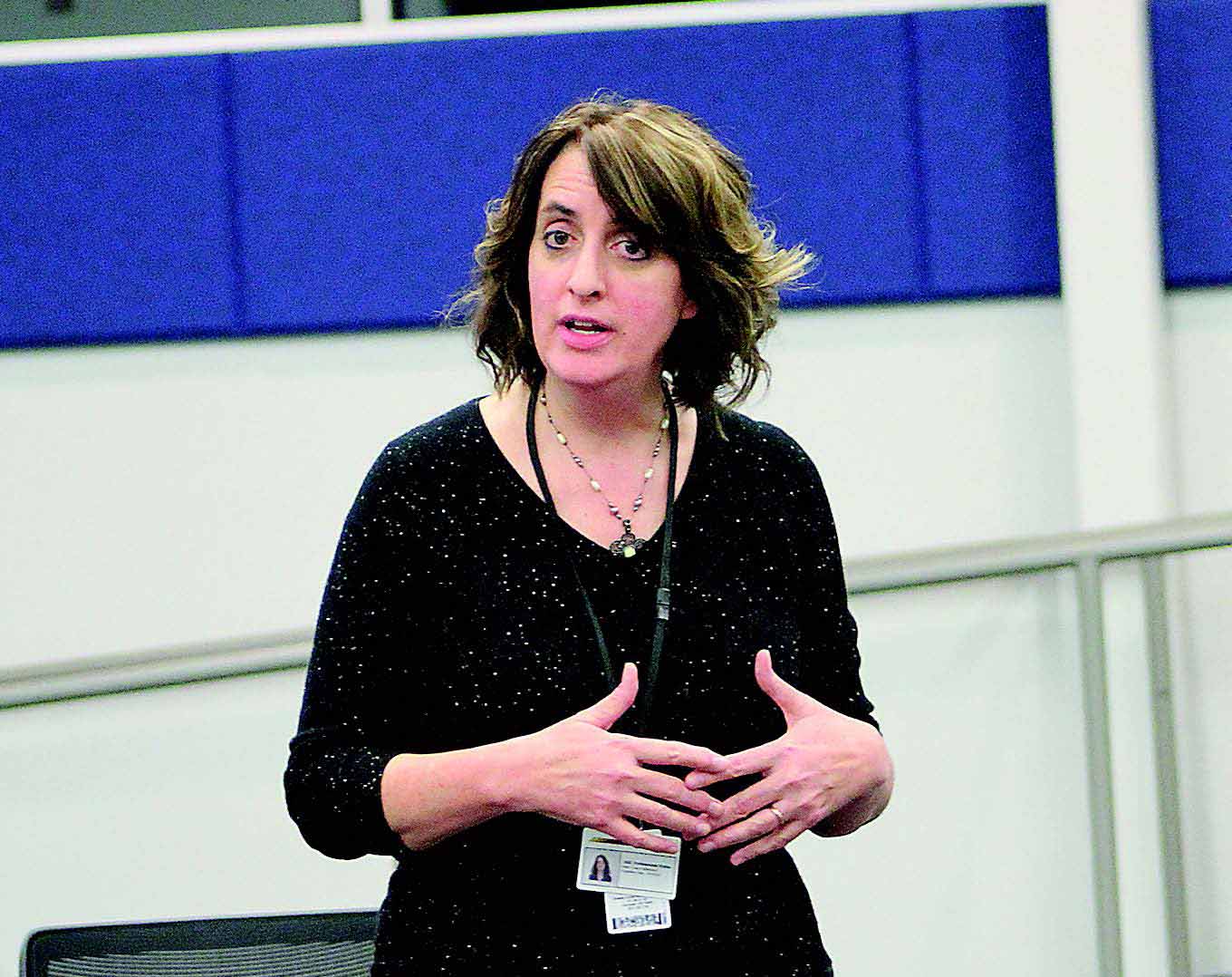
That’s why on Monday night a room full of adults and some teens gathered to the KM High School Forum room for a presentation by Laura Sutherland, the Regional Navigator for South East Minnesota Safe Harbor.
WHAT IS SADE HARBOR
In 2014 Minnesota was the fifth state in the United States to create Safe Harbor laws.
“For the first time, Minnesota youth who engage in prostitution are viewed as victims and survivors, not criminals. They will be treated with dignity and respect, and directed to supportive services, and shelter and housing that meet their needs and recognize their right to make their own choices Sexual exploitation of youth in Minnesota is commonly overlooked, misidentified as something else and undocumented,” The MN Department of Health website states.
These laws were enacted after it was realized that sexual exploitation and sex trafficking was ultimately public health issue, so the MN Department of Health decided to do something about it and created ways to help with the issues at hand.
“The Safe Harbor law created a definition for what sexual exploitation is,” said Sutherland during her presentation.
According to the Department of Health, “minor Commercial Sexual Exploitation occurs when someone age 24 and under engages in commercial sexual activity. A commercial sexual activity occurs when anything of value or a promise of anything of value (e.g., money, drugs, food, shelter, rent, or higher status in a gang or group) is given to a person by any means in exchange for any type of sexual activity.
A third party may or may not be involved.” Sutherland during her presentation explained that oftentimes poeple especially youth fall victim to sex trafficking or sexualexploitation through “grooming” by bad people oftentimes donw through social media. "Most kids whoa re sexually exploited or sex trafficked first happen to them through social media,” Sutherland said.
With social media being an everyday thing in today’s society education has become for parents, teachers law enforcement, and kids has become one of important things to combat the issue.
EDUCATING THE COMMUNITY
According to Sutherland over 10,000 providers and over 12,000 students were reached last year through presentations made.
She explained that this is a very important aspect of what they do.
“This is a huge part of the work we do,” Sutherland said.
During the presentation on Monday Sutherland explained that it’s super important for parents to be become educated on the way social media works because it’s important when it comes to protecting their kids.
“We have an obligation to understand how social media works and how our children use it,” Sutherland said.
Sutherland said that the presentations that they do are really important for helping to reduce the amount of sex trafficking and sexual exploitation across the state because everytime they do a presentation it makes more people aware of the issues at hand and educates a whole new group of people.
“Every presentation helps to make a difference, because it’s another group of people who are educated,” Sutherland said.
While Safe Harbor is something that recently has gain more respect from those in the state, at first Sutherland explained, that people were somewhat skeptical, mainly due to the fact that people thought that these types of issues aren’t in Minnesota.
Despite those attitudes at first she explained that as more survivors are coming forward and telling their stories, the more real it becomes.
“As awareness has increased it’s become more real for people,” Sutherland said.
Although, Sutherland and professionals and regular folks who work hard every day to combat the issues of sexual exploitation and sex trafficking know that they can’t fix the problem overnight they are in it for the ‘long haul.’
“Were not going to fix the problem overnight,” Sutherland said, “we’re in this for the marathon,” she added.
Comparing it to things like drunk driving, seat belt laws, or cigarettes, she explained that changing the culture around it comes from local partnerships in the community all working together to make a change.
“Were very fortunate to have good community partnerships across the region, including in Kasson,” Sutherland said.
*/
*/
*/