


Redemption story leads to two local first time voters
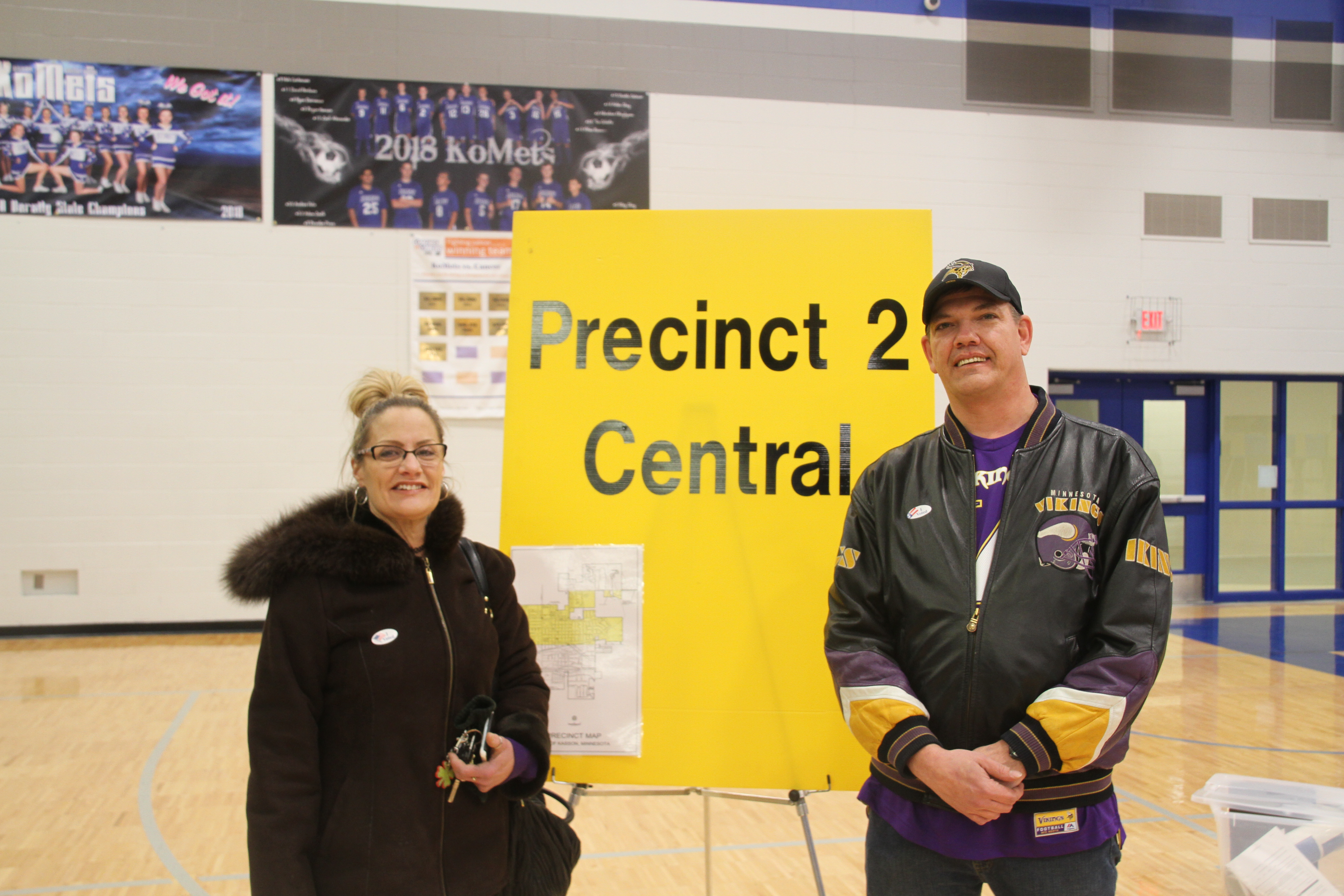
When Mike Ronningen, 44, of Kasson walked up to the voting booth and casted his vote it marked the beginning of a new chapter in his life.
For the first time in his life he had the right to vote in an election.
“I been waiting for this day for a while,” he said.
Ronningen has struggled with drug addiction his whole adult life, which has led to his numerous drug possession convictions including his first felony conviction at 20 years old, and a second-degree conviction in 2012.
The 2012 conviction came when he relapsed three and a half years after being sober.
Already on probation for 25 years for a previous 2004 drug conviction, Ronningen decided to execute his prison sentence of a little more than six years in order to get done with being in the system.
That was the last time he used drugs.
For Ronningen, he admits going to prison may be the best thing that’s ever happened to him for his sobriety.
“No one's going to change their minds until they are ready to quit,” Ronningen explained. “After being in prison I realized that life wasn’t for me,” he added.
While in prison like many non violent criminals, he was given the chance to apply for a prison boot camp program designed only for non violent criminals.
As part of the program, the prisoners must follow all of the very strict rules like doing intense exercise for the majority of the day, not talking while eating and not getting in any trouble.
The punishment for breaking the rules would be getting sent back to prison and having to finish the prison term.
After being on the waiting list for a year, he was able to join the 17 person boot camp, but soon his ability to complete the program was jeopardized after his celuitize worsened.
Because of this, he was sent back to prison for 10 days, spending that time in segregation, before being able to return.
After being in the program for seven months, Ronningen was released from prison but still had to serve about a year on intensive supervised probation.
This includes things like having only a few hours a week of free time, drug tests randomly even at work and having to calling every week with his weekly schedule.
Since his time on intense supervised release he has continued to do what he needs to in order to stay sober every day and has had success in his personal life as well.
A few years ago, Ronningen met his wife, Laura, on a recovery website, who is originally from Oklahoma.
After getting to know each other, she came and visited Ronningen a few times where they connected with each instantly because of their past of them both being drug addicts as well as their interest in metal music.
After getting off probation, she moved to Kasson to start a new life and on Nov. 11, 2017 the two got married.
Like Ronningen, for the first time in her life at the age of 51 she had the right to vote in the 2018 election.
Two months ago Ronningen was officially discharged from probation for the first time since he was a very young adult, which meant he regained many rights, including the right to vote.
In Minnesota, those convicted of any felony are not allowed to vote until they complete all of their sentencing requirements including probation, parole etc., even if they never are incarcerated.
Currently this means over 52,000 people a year aren’t allowed to vote, according to the Minnesota ACLU.
While that is the case now, many lawmakers and other organizations have been pushing in the last few years for new legislative measures that would permit felons to vote as long as they aren’t incarcerated.
In March, a vote was taken by the House Public Safety committee, on a bill sponsored by Rep. Raymond Dehn, a Democrat from Minneapolis.
As part of the bill, it would allow felons to vote even while on probation or parole as long as they aren’t incarcerated.
The goal of the bill would be to allow felons who are out in society to be able to participate in society.
“We’re expecting them to be good, upstanding citizens,” said Dehn during the committee hearing. “One of the basic sort of impacts of being a good citizen is actually participating in our voting,” Dehn added.
Even with emotional testimony during the hearing and party lines being crossed during the vote, the bill ultimately failed 8-7 in the committee.
While Ronningen knew that when he was first released from prison he wouldn’t be able to vote right away, his release was still a light at the end of the tunnel because he wouldn’t be facing 25 years on probation, without the right to vote.
The message that Ronningen wants people to take from the story is that many people in the state and country aren’t able to vote because of their felony convictions and people shouldn’t take the right to vote for granted.
“It [the right to vote] can be taken away so quickly,” he said, “ we are super excited to have our right to vote because we never were able to before,” he added.
For Laura she said with a smile on her face, after casting her vote that she feels happy that she got to finally vote.
“Were officially productive members of society,” she said.