


Dodge County faces Emerald Ash quarantine
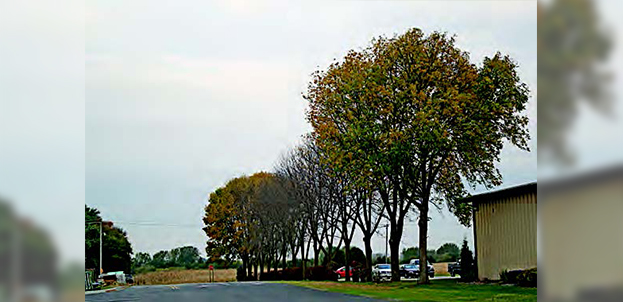
Dodge County has been placed under an emergency quarantine by the state Department of Agriculture after an emerald ash borer was found in a trap mounted to an ash tree in Kasson in September. The trap and the infected tree are located between the high school and the Holy Family Catholic Church, explained Parks and Recreation Director Ron Unger at a community meeting Monday night. The trap was set by the U.S. Department of Agriculture.
The quarantine is put in place to limit the movement of fir - wood and ash material out of the county. Because the larvae live under the bark of an infested tree for two years while they grow, they can stay in firewood and be carried across borders.
Civil penalties for ignoring the quarantine include fines of up to $7,500/day of violation. Criminal penalties may also apply.
Entomologist Angie Ambourn from the state Department of Agriculture spoke at the meeting and pointed out the three steps to help keep the insect from spreading:
“Don’t transport firewood. Buy firewood locally from approved vendors and burn it where you buy it.
Be aware of the quarantine restrictions… This includes restrictions on the movement of ash trees, wood chips and fir - wood.
Watch your ash trees for infestation. If you think your ash tree is infested, go to www.mda.state.mn.us/eab and use the ‘Do I have emerald ash borer?’ guide.”
The phone number for the department of Agriculture is 1-800-967-2474.
Unger asked residents to call the Kasson city hall at 634-7071 and leave their name, phone number, and address if they have questions about their trees.
Unger said a recent inventory shows there are 237 public ash trees in Kasson. If a person lives near one of the public ash trees – such as on a boulevard – and wishes to treat it, they may do so. They should just notify Unger.
Council member Chuck Coleman said that the city council would decide very soon what the city would do about the public trees.
The latest treatment for the bugs is completely effective and it is cheaper initially than having the tree taken out, said Ambourn. Tree owners need to be aware they will have to continue the treatments for the life of the tree. The chemical, emamectin benzoate (Avermectin) is injected into the tree by a professional and the cost is based on the tree’s diameter, usually about $10/diameter inch as measured at chest height.
Owners of private ash trees should decide what to do about their trees. If the tree is ignored, it will die because the larvae eat the nutrients the tree needs to survive. Unger and Ambourn both stressed how dangerous dead ash trees are because the wood is so brittle. Once dead, they are harder to remove.
The season for treating the trees is about over for the year, explained Ambourn. The tree needs to be actively transporting nutrients up into the canopy for the chemical to work. The trees are very effectively treated in the spring.
However, winter is a good time to remove trees if owners decide to take that route.
Minnesota has an estimated one billion ash trees; more ash trees than any other state. Dodge County’s neighbors to the east have all been infested including Olmsted, Wabasha, Houston, Fillmore, and Winona counties as well as the counties near the metropolitan area.
It is thought that the larvae entered the U.S. via packing wood such as a pallet and was first noticed in Detroit. Now it has spread across much of the eastern U.S.