


Jim Mullen in many activities during years in Mantorville
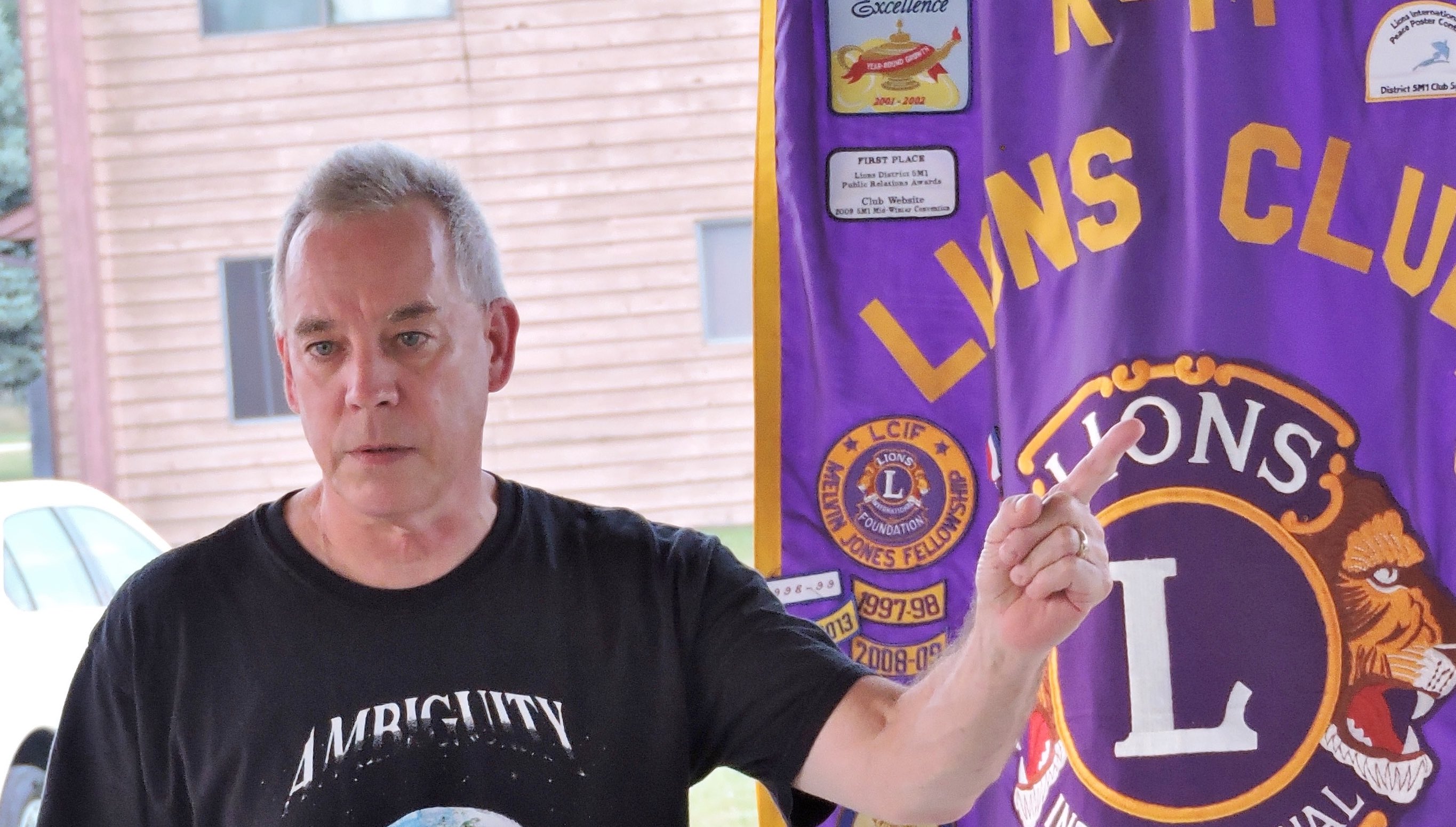
For six years Jim Mullen made the trip from Rochester to Mantorville to work for Keller Technologies while many residents from our communities were heading to Rochester for their jobs. “I always had the sun to my back while driving to and from work,” Jim said.
Jim grew up in Peoria, and said he became interested in science during fifth grade by picking up specimens from the swamps and creeks and bringing them to school. It was a way to help share his interest in biology with the students and Catholic nuns at the school.
While in the seventh grade, the school had the students in his class work with first grade students, (eighth grade with second graders, etc) in a mentorship program. It was a good way to help encourage him to volunteer. In high school he continued to focus on classes in science and math each year plus take part in school sports and activities.
Jim said he is the seventh son in his family, followed by one sister. He has six older brothers who pushed him to compete, plus his successful parents gave him the drive to succeed adding in the nuns for doses of discipline. Jim started playing piano in the first grade and would have to practice after school for each of his parents and sitter all at different times each day. By seventh grade, he was only learning from classical sheet music (Bach, Chopin, Mozart, etc.).
During his lessons he was assigned new sheet music each week to learn. He would also play one from the previous week by sight reading and a third one assigned before that from memory. Because he played piano and was very good, the nuns were not allowed to smack his fingers or give detention when any discipline “might be needed.” His punishment, then was to have his lessons at 3:30 p.m. on a Friday afternoon.
During his lessons, the nuns brought their chairs into the hallway behind him and unknown to him they would listen to him play. Jim was provided the option to stop playing, but after he quickly learned Roger Miller’s tune: “King of the Road,” he said that he wanted to play popular music like that; meaning music from The Beatles and The Doors.
But his teacher allowed him to play songs by Gershwin and Henry Mancini. After raising his children, Jim went back to playing the piano and started playing popular music but found he really didn’t enjoy playing some of these rock songs as they are too simple since they use the same collection of notes over and over through the song.
Jim attended Southern Illinois University and received a Bachelor of Arts in microbiology. The school told him if he just took another couple of classes (quantitative chemistry and a second semester of calculus) he would have also received a Bachelor’s Degree in chemistry and another degree in math, but he was ready to move on with life. While at SIU, he got involved in volunteering with the Special Olympics program.
He then attended West Virginia University and earned his Master’s Degree in genetics working with alfalfa and transferring genes into the plant. In addition to his degree Jim worked at the University Hospital taking care of lecture equipment and teaching CPR to the nurses. He then expanded that teaching into the community where he led a group of 150 instructors, volunteer teaching CPR to police, doctors, dentist, emergency service personnel and students in the Medical and Dental Schools of WVU.
He even had a program in the Housekeeping department of two hospitals in Morgantown, WV. Jim estimates that the group certified more than 6,000 people each year, in the town of about 24,000 residents.
After graduate school, Jim started at a position in Maryland working for the USDA which also involved the FBI and DEA on these projects. He was investigating how cocaine was made by the plant, Erythroxylem. He would grow tissue cultures of the plant cells, seek to interfere with the cocaine pathway and also purify the drug for analysis.
As his career advanced into agriculture research and then into bio pharmaceutical vaccines, Jim spent a lot of time volunteering with the high school’s music program as his children were members and they would travel to other states to take part in marching band contests.
While he was president of the booster club, the county council said the band was breaking the county noise ordinances after a neighbor to the school complained that they were too loud when practicing in the evening. This issue became the sixth leading story in their state news and finally a ruling was passed that schools would be excluded from the noise law and the State Legislature changed the law!
When a friend told him about Lions and asked him to join their club, he did in 2007. It was another way to pursue his interest in volunteering while pursing science. Being able to do both throughout his life, is why Jim says he is “most fortunate person on the planet”.
He was really excited to come to work with Keller Technologies in Mantorville when he heard the goal was to feed babies in the developing nations to help solve food shortages by using all the properties of alfalfa.
The process they developed divides alfalfa into several fractions. Each fraction could be used to feed a different group. One fraction could be used for feeding many types of animals such as chickens, shrimp and farm raised salmon. Some could still be used as hay and may even be used to supplement pet foods.
The primary fraction is water soluble protein, like whey protein. It can be used as a milk substitute for farm animals like young pigs, lambs and calves, but can also be used to feed human infants. To accomplish this for the future of humanity, Jim said alfalfa will need to be the primary source to be used in food and is an inexpensive source of energy and protein for the body compared to alternative sources now being used.
In another KTI project, Jim found a better way to purify lactose. After making cheese or yogurt, whey and lactose were just by-products left over. It was found these were polluting our waters, so communities said the processing plants needed to do something about it.
First, whey proteins were isolated, then lactose and both were used in feeds for farm animals. But the lactose still had many nutrients with it that made the lactose appear green and cloudy in solution and it also had a short storage life.
Jim developed a way to clean the lactose so effectively that it dissolves perfectly clear, similar to table sugar and the storage life is longer. He also studied the final waste product of the entire process and believes it can now be used as food in the flavor enhancing category of taste called umami.
Jim met his wife, Catherine, while in graduate school in West Virginia when she was working with coding records at a hospital and he would help the staff interpret the doctor’s notes for applying a code to a diagnosis.
They have been married for 32 years. Their daughter, Gabrielle, has a Masters Degree in library sciences, lives in Maryland and works for the Federal Reserve archiving and securing their records. Their son, Ian, received a degree in photo journalism and is now working on video projects for people who desire to expand their marketplace into the internet. He makes videos of people doing their skills, and helps them develop YouTube channels and websites. He also produces short documentaries on his travels and observations.
Jim said his wife was really unsure when they made the move to Minnesota in November of 2014 as her family is from the West Virginia area but she has come to tolerate our winters and grew to love things here such as the bike trails, closer to the Great Lakes and the mountains of the west, Rochester’s Social-Ice, Thursdays Downtown, Sunday summer concerts, good health care and the people living here.
Jim said he wanted to become involved with an area Lions club and looking online he felt the KM Lions would be a great choice as the club was quite active with projects in the community.
One day while at work, he saw a group putting up flags along the streets and highway and thought this must be a Lions Club doing this and learned of their Fly the Flag program. He talked to Lion Lynn Knutson, working with the flag project and joined the club soon after in 2015.
Jim started the rubber duck regatta at the Mantorville bridge and tried to do it twice each summer during Stagecoach Days and Marigold Days along with the support of businesses in Mantorville. The project has been the victim of weather at times with too little water and also too much water flowing at the dam site. This was the brain-child of the guy, wearing the bright yellow wig, when the duck races were being held at the dam in Mantorville during these events.
Unfortunately the pandemic forced a job furlough on Jim and he left our area this September and returned east to Maryland to work in the pharmaceutical market; reviewing and consulting for companies submitting their documentation to the Food and Drug Administration for approval of their products.
He will validate if the processes, products or devices match their documentation and are accurate with telling the truth for what the documents relate. While he was hopeful that our society would return to some degree of normal from the virus and his furlough from his employer would be short, it did not happen. He was unable to find a position to fit his work skills and to remain in this area.
Jim said he will miss his friends in the KM Lions plus residents and businesses in this community which has given him a great experience here in Minnesota. He will continue to work with Keller Technologies on the processes they have worked on and they are now moving into the manufacturing stage.
Jim said “once again, I am the victim of my own success in getting the processes he came to work on completed and now ready for the next stage to be done. So full time work would not be required on my part.”
Jim said he will have an opportunity to come back to this area to follow up on the processes at times to support them in whatever way he can. In the meantime he will continue to use his skills and knowledge in the field of science and will join a new Lions club to continue his love of volunteering when they move to their new residence.
In this way Jim will continue expanding his skills in science so he can continue to volunteer and help others, where he will remain as “the most fortunate person on the planet.”
It sounds similar to the classic movie scene in “It’s a Wonderful Life,” when Harry Bailey arrives and toasts his brother George: “The richest man in town.”