


Helping Vets
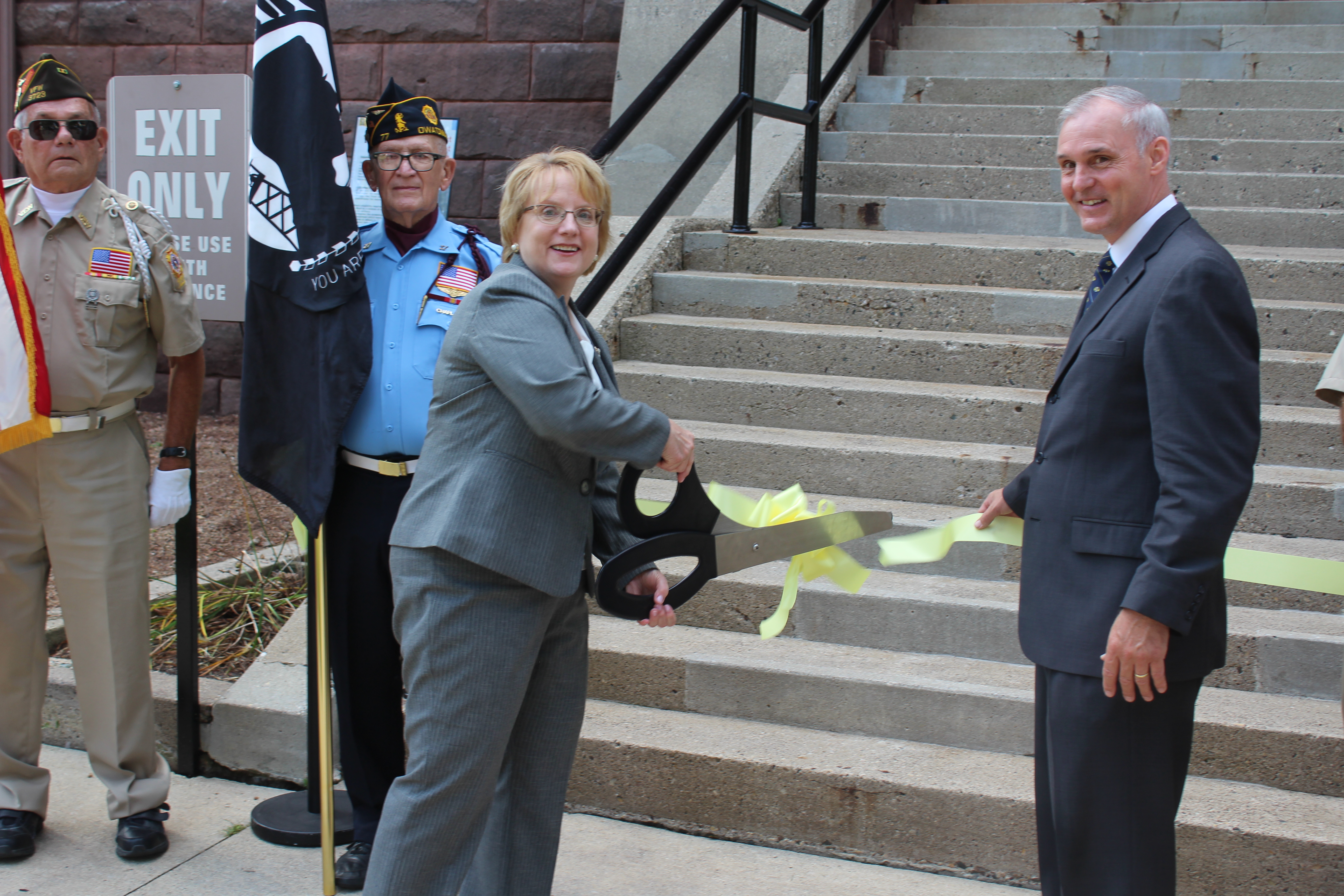
On National POW/MIA Recognition Day, Friday, Sept. 20, the Veteran’s Treatment Court for Minnesota’s Third Judicial District, which includes Dodge County, celebrated its official inauguration.
The program, which is aimed at helping veterans within the justice system, had previously operated as a pilot program and is in the same vein as the Steele-Waseca Drug Court. It offers a collaborative, judicially supervised, mentor-oriented, treatment regime for veterans within the criminal justice system.
After completing the program, those within it are able to graduate in a similar manner to drug court programs around the area. Steele and Fillmore counties serve as locations for the program. Steele serves Rice, Waseca, Steele, Freeborn, Mower and Dodge counties.
“Today we are gathered to celebrate the start of our district-wide 11-county veterans treatment program,” Judge Ross Leuning of the Third Judicial District said at the outset of the event. A veteran himself, Leuning was instrumental in getting the program off the ground and will serve as the Presiding District Court Judge for the program in Steele County.
Leuning remarked on the appropriate date chosen to hold the event. “Today is a day we have set aside to remember our missing comrades and pray that they will someday soon be back in our ranks,” he said. During the ceremony there was a moment of remembrance and reflection.
Freeborn County Veterans Service Officer Brandon Servantez was also a key player in the program’s inception. “Today really is an exciting day for Southern Minnesota and the Third Judicial District,” Servantez said. “I’ve always had a passion for working with veterans and I’ve wanted to see more resources available.”
Servantez has been involved in the planning stages since the beginning and has traveled to other veterans treatment courts to learn from them. “Now I have the privilege of working with the program assisting our veterans to obtain additional benefits that might be available to them.”
“This program is setup as a collaborative effort with all team members in attempting to help veterans succeed in the community with the resources provided,” Servantez explained. “Often times, veterans don’t know the benefits that they are entitled to or eligible for.”
During the ceremony, Judge Leuning noted that 20 veterans commit suicide every day in America. “It used to be 23, so it’s down. Of those who commit suicide, 7 out of 10 of them had no contact with veterans services,” Leuning added.
By helping those who are within the justice system, the Veterans Treatment Court will be able to reach those that most at risk. “We want to help our struggling veterans with the issues that may at the root of their criminal offenses,” Leuning said. This direct contact will help struggling veterans better reintegrate into the community.
Minnesota Supreme Court Chief Justice Lorie Gildea also shared her thoughts on the program. “I am so proud to be able to be here as this community affirms its commitment to our returning veterans,” Justice Gildea said. “It means a lot to me personally to see so many Minnesotans gathered here to honor our veterans,” she added.
“Our commitment to veterans and to military members must extend far beyond honor, gratitude, and remembrance,” Gildea remarked. “It must be reflected in how we support, empower, and care for our returning soldiers.”
Justice Gildea explained that war can affect people in different ways. “While most veterans return home strengthened by their military experience, we know that many others carry with them the wounds of war,” she said. “For some those are physical wounds while others face invisible wounds.”
“Tragically, as we have seen too often, some of these veterans become defendants in our criminal justice system,” Gildea added. “Veterans courts are an important part of the treatment court model. These programs support the sobriety, recovery, and stability of veterans by bringing together our justice system, local social service organizations, and state and federal veterans services.”
Members from across the district were there to celebrate the event, including Judge Jodi Williamson of Dodge County. “This has been an ongoing collaboration between the court system, our justice partners, law enforcement, and the veterans,” Judge Williamson said. “This is part of an overall, overreaching process by the Supreme Court and Chief Justice Gildea to bring treatment court eligibility to every county.”
“Having 11 counties in the Third Judicial District in Southeast Minnesota covered by this Veterans Treatment Court is a huge, huge plus for all the communities, for the veterans, for the justice system, and to provide for public safety for our veterans.” The Fifth Judicial District also participates in a veterans treatment court.
Like many involved in the justice system, Williamson has seen the positives that such treatment courts can bring. “We owe the veterans,” she said. “You’ve got to have the court systems dedicated to it, because they’re the movers and shakers. They’re the ones who say I’m willing to make the time to do this.”
“I do drug court in Dodge County, and it’s remarkable, it’s a passion, and it’s a great thing,” Judge Williamson said, and explained that she has seen firsthand the value that such programs can bring to the community and to the people who it serves.
Due to the diligence and passion of so many people, veterans involved in the justice system in the counties of Dodge, Fillmore, Freeborn, Houston, Mower, Olmsted, Rice, Steele, Wabasha, Waseca, and Winona will be able to get the treatment they need and return to society better and more stable.