


Ellendale workshop assists teachers in tying math strands together
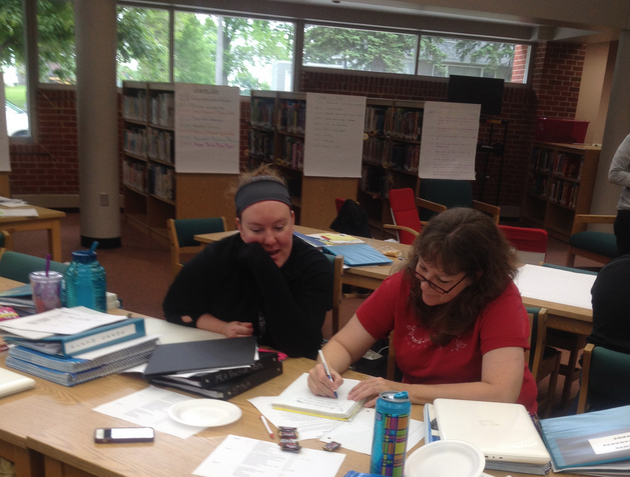
A recent math workshop is energizing Ellendale elementary school teachers as they prepare for a new school year that is still a couple of months away.
New Richland-Hartland-Ellendale-Geneva School District Director of Curriculum and Instruction Terri Engel said as a school district, they are looking to increase their test scores and bring our students’ performance levels up. “We’re trying to take kids from just meeting the standards to that higher level of understanding and applying those basic math skills in more of a deeper thinking, problem solving situation,” she said.
The official math scores have not been released yet, but Ellendale Elementary School Principal Doug Anderson said there is always room for improvement. “Our teachers have been working hard at looking at their data, identifying the needs of our students, specifically pulling out strands within those standards and focusing on improvements through intensive efforts through our RTI time,” he said. “Our underlying goal is to show growth for all students.”
Early in June as many as 20 elementary school teachers spent three days in the classroom creating a plan to further improve math instruction and student achievement with assistance from Paul Agranoff from Resource Training and Solutions. Agranoff’s expertise is math professional development.
Teachers mapped out their math instructional goals for the year using the Minnesota State Math Standards and Benchmarks to guide them. Then the teachers wrote math common assessments aligned to the state standards to measure students’ abilities after each quarter. The assessments provide teachers information regarding their students’ basic skill levels and ability to solve complex problems aligned to the state math standards.
Anderson said there are students that are getting the right answer, but some of them can be pushed to think and learn beyond just that right answer. “That is going to cause them further down the road to be even more successful and more creative with their answers,” he said.
Engel added that the textbook is a teacher’s resource. “In the past, your textbook is your curriculum,” she said. “Now there is that shift in thinking, we know what the kids need to learn, know when we need to teach it, and the textbook is a tool to help us get there.”
Anderson said it will help increase math scores because the teachers will be much more specific and purposeful with our instruction. In some areas, the teachers have been doing some of these pieces of instruction. “What we haven’t done as a school is to map out our standards for the year specifically as a grade level. That brings it all together,” Anderson said. “The other beautiful thing that happened in these three days was the wonderful conversations with one grade level and the grade level above or below. There was a lot of collaboration. We just haven’t had the time to do that in the past.”
Engel added there used to be a disconnect between teachers who don’t have to have their students tested and those who do. “They have realized how important what they do is to our success,” she said. “The past couple of years you can really see the difference in the third grade. What they are doing in the lower elementary is definitely having a positive effect on what is happening in third grade and up.”