


Bigelows continue visit to Scandinavia
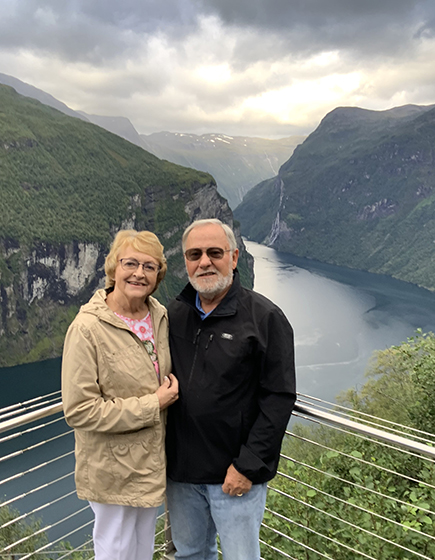
(Editor’s Note: This is the second part of Ramona Bigelow’s account of the trip she and her husband Bruce took to Scandinavia last summer.)
On our way to Norway! We had to take a ferry from Hirtshals to the part of Kristiansand in Norway. It was 3-1/2 hours on the ferry. We ate a meal, did shopping in the duty-free shop, and enjoyed the scenery along the way.
Norway has 460,000 lakes. It is the land of tunnels — 1,100 tunnels! Also, the land of fjords — more than 1,700! We had no idea what a fjord was but soon were overwhelmed by the beauty. Our guide kept telling us — “you haven’t seen anything yet!” and he was correct. We drove past fjords, lakes and forests to the city of Stavanger, one of Norway’s oldest settlements.
In the morning, we visited the village of Hafrsfjord, home to a big Vikings settlement. On its original site, houses from the iron age have been rebuilt. We had a guided visit and tasted some Viking snacks — reindeer jerky, apples, hazelnuts and flatbread.
We had an enjoyable young lady as a guide who took us into the houses. The women carried the keys to the lock box, and to the storehouse where supplies were held. If her husband tried to get the keys away, she could divorce him! We saw the mounds where the original Vikings were buried.
From there we went to the monument — Swords in Rock — made of Viking swords found across the country to form three swords fixed into the ground symbolizing peace, unity and freedom. This is where Norway was gathered into one kingdom in the 9th century.
We departed for the city of Bergen, the city of seven hills. It is the second largest city in Norway and home of the composer Edward Grieg.
We had a bus ride with an orientation tour past the bustling fish market. That evening we had a special dinner at a Be My Guest experience, visiting the Ovre-Eide farm, worked for five generations by the same family. Arold, the owner, told us the story of the farm, played the piano and danced with a young girl dressed in a Norwegian costume. Arold had horses, sheep, chickens but no actual farming that we could see. The government subsidizes the farms in Norway.
We traveled to Televag village, most likely the greatest emotional visit. Telavag has a very special place in Norwegian history. The whole village was razed to the ground in May 1942 as a reprisal for the deaths of two Gestapo officers. The two were killed in a shoot-out with agents of the resistance movement, who had come from Britain and lay in hiding in the village. The village has been restored but the heartbreak of the history remains.
Very early the next morning we drove to the ski resort of Voss where we boarded a train ascending over 2,800 feet above sea level. We went past the Flam Valley to the Kjosfossen Falls and the legendary forest spirit who dances there to lure men into the forest.
We had only a few minutes to catch the second train, and Bruce lost his phone on the first train! It popped out of his pocket and wasn’t discovered until the second train. We informed our tour guide about the missing phone.
Bruce was intent on not letting it ruin our trip. He had been taking all the photos and worried they wouldn’t transfer to his iPad. They did transfer, thank goodness! We took a cruise along the UNESCO-listed Naeroyfjord with its towering mountains and fabulous scenery. We drove through the longest tunnel in Norway — 16 miles.
After breakfast we went to Fjordland Farm which was delightful! The families have formed a sort of commune with small farms. The guide’s farm goes back several generations. Her mom and her three boys joined the tour. They have sheep but their biggest money maker is fruit…. plums, apples, and pears. They make hard cider and wine from the fruit. They also have a restaurant for special occasions. They served plums, cider and lefse which was not made from potatoes. It was served with cream and powdered sugar.
We received the good news that Bruce’s phone had been found! It took some time to fill out all the paperwork online. Finally, we were able to arrange for shipping the phone back to Kasson by DHL. Bruce took pictures on his iPad.
The next day we went on a tour to the Trollstigen and saw Norway’s most famous mountain road, traveling past steep mountain slopes, tumbling cascades and fertile valleys. This is the path of the trolls via Eagle’s Road. This road is closed in the winter because of snow. We were amazed at the skill of our bus driver, maneuvering the bus on 11 switchback curves! The bus cannot be longer than 15 meters to make the curves.
That afternoon we took a cruise on a ferry, past two small villages. We saw beautiful waterfalls, strawberry fields, and raspberries grown in huts. The Suitor waterfall was used by Absolut vodka in their advertising. The hay bales wrapped in white plastic are said to be toilet rolls for the trolls. Geiranger gets their drinking water from the waterfalls. Two hundred people live in Geiranger year-round, and there are 6,000 visitors in the summer.
We stopped at an enormous gorge. Our guide told us there was a good chance that there would be fruit for sale, and he was right. We bought a quart of strawberries that had been picked two hours before! They were incredibly sweet which is due to the long hours of sunlight in the summer. We also bought a quart of plums which were delicious. We shared with our fellow travelers. The toilets here were interesting — metal doors which were heavy and looked like they should be in a prison.
We stopped in Trollstigen at a glacier which was far in the distance with long hiking trails. We didn’t get close because we had seen so many glaciers in Alaska. Our guide shared a picnic of strawberries, plums, candy and Aquavit. Aquavit is a Danish drink, made in oak barrels, that has to cross the Equator twice on a ship to age. We had shot glasses of the drink which really warmed us up. We bought a bottle in Stockholm to bring home. We’ll share it with the family sometime.
A scenic drive from Geiranger past high peaks brought us to Lom, the gateway to the Jotunheimen Mountains. Here we visited a 12th-century wooden stave church, adorned with Runic inscriptions, paintings and carved dragon figures that are said to protect it against evil. We visited with the guide inside the church and told him about the village of Bo where Bruce’s ancestors came from.
Next stop was to Maihaugen, located on the hills above the Olympic Town, where we had a guided tour at the farm Bjornstad, Norway’s largest open-air museum. We could step back in time to experience what life was like in Norway centuries ago. We sat in the schoolhouse and our guide told us a few interesting facts. Only males were allowed to be teachers. If he taught for seven years, he didn’t have to go into the military. If not married, the children would bring him food.
Women could not work outside the home. Reading was the most important subject taught.
In the farmhouse, the guide gave us all jobs. The men had important positions in the family and the women had less important chores. I was a dairy maid and had to stay with the cows in the barn! This was appropriate as I used to milk cows.
We then visited the stave church. Outside was a post with a ring and a padlock. If one misbehaved in church, had a baby out of wedlock or other so-called crimes, the ring was put around the neck and the padlock attached. The services were three hours, and you had to stand up and could not fall asleep.
We then visited the extraordinary Olympic ski jumping arena in Lillehammer where the 1994 Olympics were held. We rode the chairlift to the top of the ski jump. The views of the town were spectacular.
We departed on the bus to Oslo, Norway’s cultural capital. A local specialist shared the city’s sights including the Opera House, the medieval fortress of Akershus, and the 19th century Royal Palace. We visited the fascinating Vigeland Sculpture Park, a huge park and gardens with incredible sculptures. Mr. Vigeland who made the sculptures hoped people would make their own conclusions as to the meaning of them. Our guide gave us her interpretation but said we should decide ourselves.
We went to the Norwegian Maritime Explorers. Norwegians have been exploring the world’s oceans for generations. The 19th century polar exploration ship Fram sailed to the Antarctic and then to the Arctic more than a hundred years ago. At the pole, Amundsen raised the new Norwegian flag. We toured the Fram ship and learned about its icy journeys.
The spirit of adventure was followed by visiting the world renowned Kon-Tiki raft that crossed the Pacific with Thor Heyerdahl. This was meaningful for Bruce as he had read the book to his students.
A very early morning departure as we crossed the border into Sweden and continued via Karlstad on Lake Vanern, the largest lake in the European Union. We arrived in the island-ringed capital of Stockholm for a two-night stay. The highlight of the entire rip happened that evening. We discovered beauty and history combined during a walk in the fairy tale Gamla Stan, where little has changed since the 16thand 17th centuries. There were tunnels under the streets that connected to the palace. After eating our evening meal, we walked to the palace where we saw the changing of the guard.
In the morning, we met the local specialist for a sightseeing tour of the waterside City Hall, many other buildings with a stop at the Royal Palace, in the heart of Stockholm’s quaint Old Town. Our guide explained the age of Viking exploration and the fish and fur trade.
We had a real-life encounter with the past on a visit to the 17th century Swedish royal warship Vasa. This was magnificently restored after spending three centuries on the seafloor. It sailed for only 15 minutes. It was brought up from the sea in 1961. Thirty people died when the Vasa sank.
More interesting facts about Scandinavia. Lutefisk is no longer eaten much in Norway or Sweden. Most people have never heard of lutefisk. The tradition is kept alive here by Norwegian immigrants. Brown cheese is very popular. We tasted it and it’s very mild in flavor but looks awful! In Sweden they have a heavy sugar consumption by the people. We stopped at a massive candy store. Our guide said the dentists make a good living! Also, snuff is a big seller in Sweden.
There are more than 100,000 lakes in Sweden. The sidewalks are heated in Stockholm to prevent black ice. Parents get 480 days of maternity and paternity leave. The King must be protestant. In Stockholm there are three Catholic churches and two synagogues, the rest are Lutheran.
Sweden has a huge music industry and is a major vodka producer. Timber is also a big industry. There are millions of bikes, and they will run you over.
IKEA started in Sweden in 1947. The CEO lived very simply, and he claimed he had a light bulb moment when he wanted to take a wardrobe home. If he took it apart it would fit in a car. There are saunas everywhere.
After the tour, we had a bit of time for shopping. That evening we went to the world’s first Ice Bar. The temperature was 19.4 degrees F inside the bar. We had a drink in glasses made of pure river ice. We wore insulated capes and gloves. It was cold but we tough Minnesotans have endured colder temperatures!
Our farewell dinner was held in the hotel restaurant. We had a delicious meal, sitting with our best friends.
Our last breakfast at the hotel and a limousine took us to the airport, accompanied by two travelers from Oklahoma and our guide.
We boarded the plane to Iceland, with an hour layover, then boarded the plane for the long flight to Minneapolis. We arrived in Minneapolis and went through the very long customs line. We were to catch the shuttle, so we were quite anxious about the long wait, but we did arrive in time. We got to Rochester totally exhausted, drove home to Kasson and the phone was waiting for us at the front door.
There were a few things that were a surprise during the trip. None of the hotels had washcloths! We used my makeup remover wipes in the shower. Many of the bathrooms were coed. It was a bit alarming to have both genders in the same bathroom. The first time a man stepped out of the stall next to me, I had to check the outside signage to make sure it wasn’t a men’s toilet!
Many of the bathrooms required payment. When there was a line for the women’s toilet, the first person would pay and then the next ones could enter the bathroom, one at a time, by holding the door open. In Scandinavia, when they toast a drink, they say “SKOL”! We felt right at home! Another couple on the trip were from Sioux Falls and they winter in Arizona, just a mile from us! We plan to get together this winter! It was an adventure and an awesome experience. So good to be home!